 Tech-Jutsu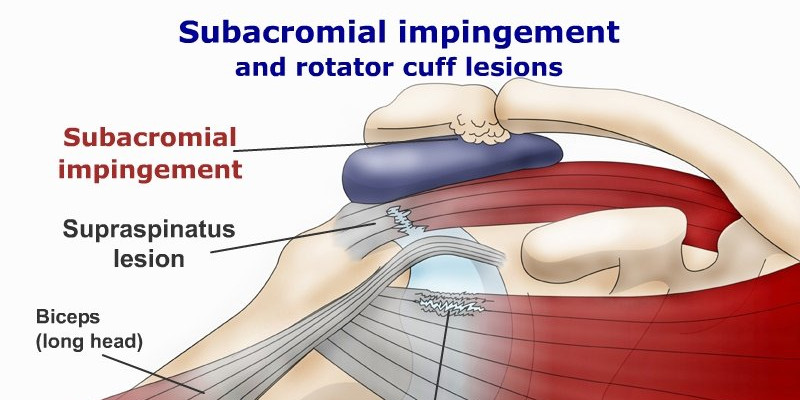
I’m usually blissfully unaware of potential problems with training until they actually happen, and then I start to learn much more than I wished. A few years ago (autumn 2016), after a particularly aggressive kuzure ude guruma whereby tori lifted me off the mat, one of the muscle tendons in my shoulder tore. At the time, it didn’t feel too bad, because I was in very good physical condition, and the larger muscles compensated, but over the coming weeks and months I noticed a distinct stiffness in my shoulder and limited range of motion. After visiting the physiotherapist, who tried to single out that one particular tendon by injecting an anaesthetic, and putting even more strain on the tendon, it became much worse. At that point, I was not able to raise my arm over my head, sleep on that shoulder, or push the vacuum cleaner around. Not only did I feel that training was out of the question, but I felt like an invalid even doing chores around the house. If, like me, you are very keen on training, this can lead to some form of depression, which it did in my case. Note to self: Do not base your persona or self-worth on your abilities.
After nine to twelve months of rehabilitation exercises and coutless hours spent watching YouTube videos to determine what was going on, I could finally get back to training gently, and one term later, i’m back to full speed.
So what’s going on, and what do you need to know to be able to have an intelligent dialogue with your orthopedic doctor?
Rotator-Cuff-2
The rotator cuff is a catch-all term for 4 seperate muscles that control the shoulder movement: Infraspinatus, Supraspinatus, Teres Minor and Subscapularis. If you’ve got shoulder pain, it’s likely one of those muscles or their respective tendons. But that’s not all it can be! You could have impingement, whereby there is simply not enough space between the clavicle and the scapula so that the tendon or the subacromial sac (bursa) is getting pinched.
In the case of a tear, you may have torn the muscle, which will heal relatively quickly–or the area of the tendon closest to the muscle, or the tendon itself, close to the attachment with the bone, which will be the most difficult to heal. It may be a partial tear (less than 1cm) or a major tear (greater than 2cm) or may even be completely detached. You’ll know if that happens because you will be completely unable to raise your arm out to the side. If it’s a partial tear, then rehabilition will eventually get you back to normal, or mostly normal, but major tears will likely involve surgery where the surgeon will staple an attachment pad onto the bone where the tendon attaches, and then to the healthy side of the tendon or muscle. This pad will eventually fuse with the muscle and tendon to give you back most of the function. But surgery must always be the last option. If it’s remotely possible to get function back with rehab, then go for that even if it takes a long time.
In my case, I had a partial tear of the supraspinatus, which felt like my arm was useless, so major tears are probably so noticeable that you have to visit the emergency department as soon as you’ve injured yourself. Trust me, you’ll know. I also had a smallish bursa near the clavicle, which was probably due to some kind of rupture when I injured myself.
Using several tests available on the internet, it’s possible to get a general idea of which muscle tendon is at fault, and i’ve found the following site to be very useful and comprehensive in diagnosis:
As for rehabilitation exercises, you need rubber bands of varying strength and a 2-3 kg dumbell. The weight is important. Anything heavier, and you start to use the larger muscles when performing the exercises. The light weight puts all the focus on the tendon instead, which speeds up recovery. Two Channels that I have gained a lot of respect for when searching YouTube, i.e. guys that really know what they’re talking about, are Brent Brookbush and Athlean-X, a.k.a Jeff Cavaliere:
I have my own set of exercises for the supraspinatus tendon, which involves face pulls and external rotation exercises with a rubber band, as well as pressups and pullups to strengthen the surrounding muscles (but don’t start with pull ups), as well as several floor exercises with the dumbell; led down, arm raised vertically, figure of eights with the weight, vertical weight presses and pendulums from above head towards feet. Check the above channels for more exercises. These have given me the greatest benefit with regards to recovery, even if I had several other exercises to perform from the physio therapist.
A word of warning: The following are techniques that I have identified with the Swedish system of Ju-jutsu Kai that I train in, that stress the shoulder joint and can over time lead to the injuries mentioned.
Seoi nage Ude henkan gatame Shiho nage Ura makikomi Kuzure ude guruma
“Good luck”, he said, grimly.