Rolling List Of Injuries

  1. Left Elbow bursa burst due to incorrect break falls; 2010
  2. Neck twisted/tendon damage and vertebrae compression during rolling in ne waza; 2010
  3. 2nd toe right foot stomped on and malformed at second joint; 2012
  4. Plantar Fascitis and Achiles heel over-use injuries due to bare foot training, mainly right foot. Ongoing; 2015
  5. Supra Spinatus right shoulder torn during 2nd dan technique. 3 year re-hab; 2016
  6. Ligament torn long finger right hand due to gripping too hard; 2018
  7. Operation on left elbow to remove bone growth due to break falls; 2018
  8. Left shoulder supra spinatus damaged due to O Soto Gari …
more ...

Small Improvements

I’ve been training the same kihon waza at all belt levels for a number of years now (as well as the techniques towards the next grade), and i'm starting to get to a point where I feel confident teaching them correctly. But attaining that level of quality and correctness that i’ve got in my mind is so elusive! Experience in training techniques in a certain way--your way--leads you to a point of developing concrete ideas about how techniques need to be performed such as where to place your feet; weight distribution of your opponent; finding the correct point …

more ...

Why Do We Wear A Gi?

keikogi

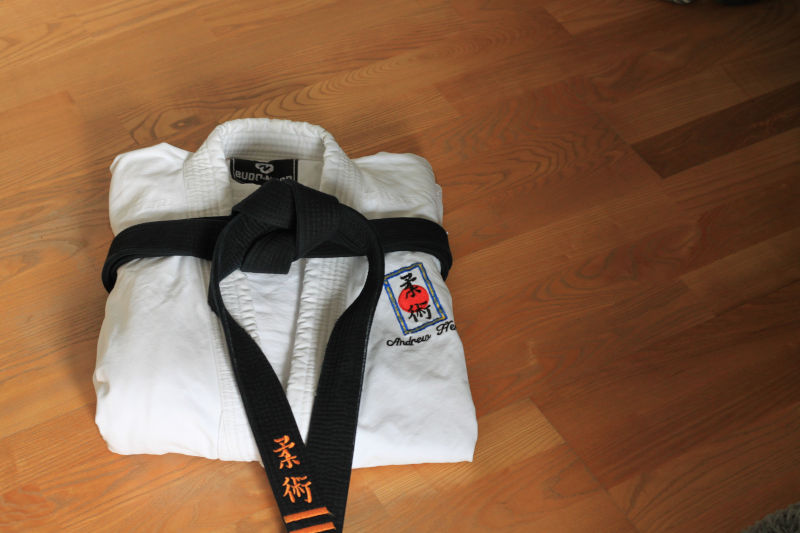
Or, to be more precise a keikogi, which translates to “training clothes”, because ‘gi’ on it’s own, simply means clothes.

Why do we wear a keikogi in Ju-jutsu, Judo, Karate when MMA and BJJ No-Gi grappling, to take a couple of examples, have both contributed to changing perceptions, with popular opinion moving away from keikogi? This trend seems to shift away from tradition and conformity towards individualism, personal style and an unneccessary focus on physique as an indicator of ability. This is not to say that BJJ No-Gi is not the correct way or that lack of keikogi in …

more ...
Modern Day Japanese Ju-jutsu

Ju-jutsu (Japanese: 柔術, Jūjutsu), also known as Jiu-jitsu or Ju-jitsu, is a Japanese martial art and a method of close combat for defeating an armed and armored opponent in which one uses no weapon or only a short weapon.

“Jū” can be translated to mean “gentle, soft, supple, flexible, pliable, or yielding.” “Jutsu” can be translated to mean “art” or “technique” and represents manipulating the opponent’s force rather than confronting it with your own force. Ju-jutsu developed to combat the samurai of feudal Japan as a method for defeating an armed and armored opponent in which one uses …

more ...